
- AWS Advanced Tier Services Partner
- Established 1999
Software Development Engagement Models
Our software development engagement models differ in who leads the work and how long it runs. JBS Dev can own the delivery, put a senior team on one defined problem, add engineers to your team, support what's already running, rescue a stalled project, or assess a target before a deal.
Your product and roadmap
You set the priorities in every model
JBS Dev engineers
- Managed delivery
- Senior team
- Added engineers
- Ongoing support
WAYS TO WORK WITH US
WHAT WE DO
What Is a Software Development Engagement Model?
An engagement model sets who leads the work, who directs the engineers, and how long the engagement runs.
Getting it right matters more than the contract. Engineers added to your team need your leads to direct them. A partner that owns delivery needs your priorities and product decisions. Pick the wrong model, and your managers or the partner end up doing work nobody planned for.
Our engagement models fall into three groups. Assessments, such as technology due diligence and code audits, show what you have before you commit. Projects deliver a defined scope from architecture through release. Teaming and managed delivery add experienced delivery capacity: a managed team, a senior team on one problem, engineers inside your team, or ongoing application support. Each model stands alone or leads into the next.

Engagement Model or Pricing Model?
Fixed price and time and materials describe how the work is billed. An engagement model describes who leads the work and who answers for the result. Settle the engagement model first, then choose the billing that fits it.
WAYS TO WORK WITH US
Our Engagement Models
Each model has its own page, with how it runs, what drives its cost, and when it fits.
Managed Software Delivery
One senior-led team plans, builds, tests, and releases an agreed stream of work. You keep the priorities and the final say.
Learn moreSenior Engineering Teams
A small senior team solves one defined technical problem, such as a release pipeline or a data pipeline, alongside your engineers, then hands it back documented.
Learn moreStaff Augmentation
Experienced JBS Dev engineers join your team, work from your backlog, and take direction from your leads.
Learn moreApplication Support & Maintenance
Senior engineers fix issues, apply updates, and add features to the applications you run, whether we built them or another team did.
Learn moreSoftware Project Rescue
A code audit finds what's actually broken. Then senior engineers stabilize the system and set a credible path to production.
Learn moreTechnology Due Diligence
Before you close, senior engineers assess a target's architecture, code, security, and team, and estimate what it will cost to fix.
Learn more
SIDE BY SIDE
Engagement Models Compared
The models differ in who leads the work and how long it runs. Each one stands alone or leads into the next.
| MODEL | WHO LEADS IT, AND FOR HOW LONG | BEST WHEN |
|---|---|---|
| Staff augmentation | Your team. Our engineers join it for a set period and take direction from your leads. | Your process works, and you need more people or a missing skill. |
| Senior team | JBS Dev, on one defined problem, until your team takes over the result. | A specific technical problem needs solving, such as a release pipeline or a data integration. |
| Managed delivery | JBS Dev, for an agreed stream of work from planning through release, until the work ends or moves in-house. | You want working software on a steady cadence without managing developers. |
| Project | JBS Dev, from architecture through release, for a defined scope. | You have a clear system to build, modernize, or connect. |
| Ongoing support | JBS Dev, on an ongoing basis, for applications already in production. | Your applications need fixes, updates, and small features after launch, whoever built them. |
| Rescue | JBS Dev, from a code audit through stabilization. Then the work finishes with us or moves to your team. | A project is late, failing in production, or abandoned by the team that started it. |
| Due diligence | JBS Dev, for a scope and schedule set on the scope call to fit your deal timeline. | You're buying or investing in a company and need to know what its technology will cost to fix. |
Which model fits?
Start with who should lead the work. If your team leads and needs more hands, add engineers. If you want JBS Dev to answer for the result, choose managed delivery or a project. We recommend the model that matches how much of the delivery you want to run yourself.
HOW WE WORK
The Same Standards in Every Model
The model changes who leads the work. It doesn't change how the work gets done.
Senior US-based engineers lead our builds, with nearshore support available for ongoing work.
Agree on ownership first
Before work starts, we agree on who sets the priorities, who reviews code, who decides on architecture, and how releases are approved.
Start with what's really there
A short assessment of the code, pipeline, or environment comes first, so the plan rests on what's really there. What's broken is often less than it looks.
Small, tested releases
We work in stages, write tests for core components, and ship through CI/CD, so each release is small and easy to check. Engineers who join your team follow your release process instead.
Whatever we build, you own
You own the code and the documentation. Knowledge transfer is a service we can provide in every model, so your team can run and change the work after we step back.
AI with engineers accountable
AI-driven development is a core part of how JBS Dev works. Agentic tooling drafts routine work, such as tests and documentation, and engineers review what it produces and decide what ships.
Start With an Assessment
An assessment tells you what to change first, and what to leave alone.
Quick Launch Lab is JBS Dev's free qualified assessment. We review the system component by component, weigh difficulty against business impact, and recommend a path for each part. You get a roadmap you can act on with us or on your own.
PROOF
Results Across Engagement Models
Published JBS Dev projects. Explore the work, approach, and results.
3 yrs
Of two-week sprints on one HR program

Managed Delivery
Centralizing Legacy HR Applications for USDA FSIS
Challenge: HR systems more than 15 years old ran on ColdFusion and Microsoft Access, with almost no integration between them.
Result: One Python, Django, and PostgreSQL application replaced the agency's separate HR applications, and support calls dropped significantly.
Read the federal agency case study100+
Jobs moved to Azure in 213 days

Staff Augmentation
Integration Platform Migration for a Top Worldwide Restaurant Chain
Challenge: A costly, unreliable proprietary workflow platform was nearing contract expiration.
Result: Three JBS Dev developers and the chain's database engineers moved more than 100 jobs to VisualCron, SSIS, and Azure in 213 days, with estimated annual savings in the hundreds of thousands of dollars.
Read the restaurant chain case study75%
Shorter timeline, with a team of five
Rescue
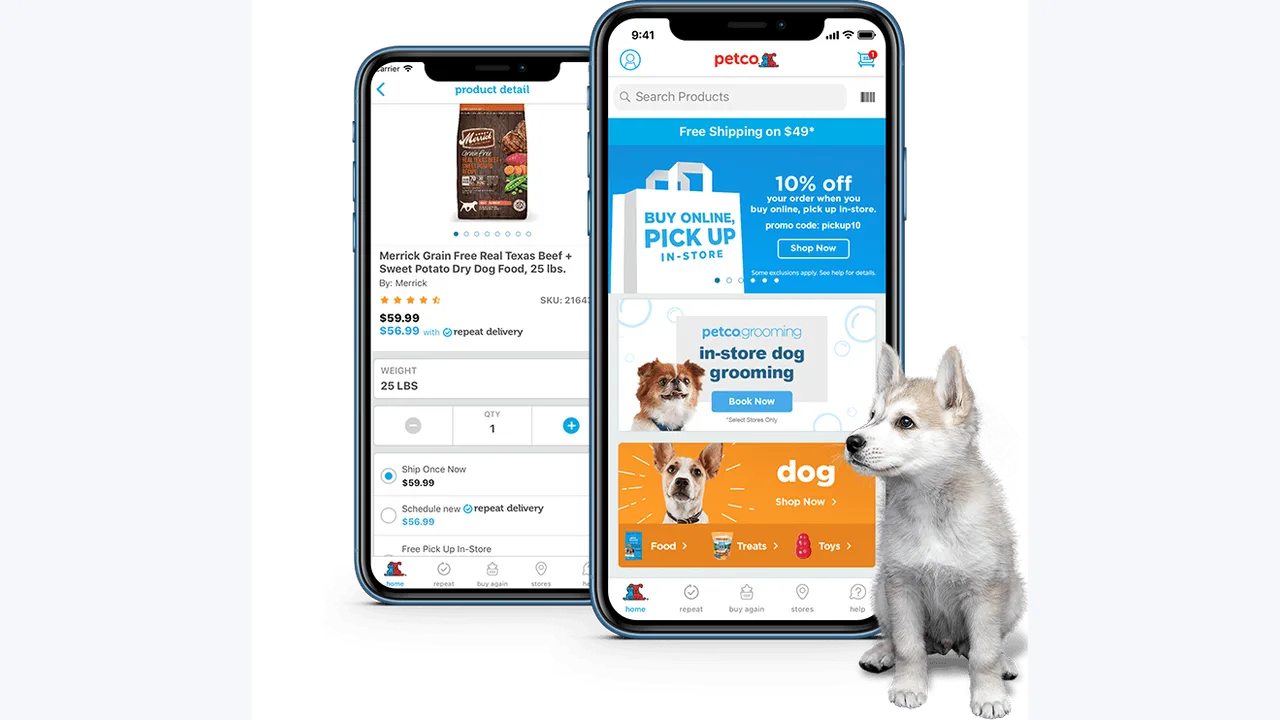
Cross-Platform Mobile Commerce for Petco
Challenge: After a year of development, Petco's mobile app was less than 25% complete.
Result: A team of five replaced a team of 50 and finished the app in four months on AWS serverless, cutting the timeline by 75%.
Read the Petco case study"JBS feels more like an extension of our internal team than a traditional vendor relationship."
Senior IT Leader, AmeriVet Partners
WHO WE WORK WITH
Engagements Across Industries
We've run these engagements for retailers, restaurant chains, education organizations, and healthcare technology companies, and we've worked with 12 portfolio companies of one mid-market private equity firm.
FAQ
Engagement Model FAQs
How do we choose between software development engagement models?
Start with who should lead the work. If your team has delivery leadership and needs more hands, add engineers through staff augmentation. If you want a partner to answer for the result, choose managed delivery or a defined project. For one technical problem, a senior team fits. We recommend the model that matches how much of the delivery you want to run yourself.
Who directs the engineers in each model?
It depends on the model. When engineers join your team, your leads assign the work, run the standups, and approve the code. In managed delivery and projects, JBS Dev runs the team, the plan, and the releases, while you set the priorities. A senior team agrees with you on what done means, then owns the solution until your team takes it over.
How long does an engagement last?
It depends on the model. A senior team engagement ends when the problem is solved and your team has taken it over. A project ends at release, with knowledge transfer and documentation. Added engineers stay for a set period, full time or part time. Managed delivery and application support run as long as the work does. For defined work, we agree on what done looks like before it starts.
Can we change models later?
Yes. Each model stands alone or leads into the next. A team that starts with added engineers can later hand JBS Dev a defined project, or the other way around. A fixed-scope build can turn into managed delivery after launch. A senior team engagement can move into another model if the work grows past one problem.
Can your engineers work alongside our team?
Yes, in every model. Added engineers work inside your team. A managed team can include your engineers or work beside them, and a senior team solves its problem alongside yours. We agree who reviews code, who decides on architecture, and how releases are approved, so the work runs as one delivery effort. See Managed Software Delivery.
Where are your engineers based?
Senior US-based engineers lead our builds, with nearshore support available for ongoing work. We agree on the mix with you before anyone starts, based on the work and the hours your team keeps. You'll know who joins the engagement and where they work.
Who owns the code and the documentation?
You do. Whatever we build, you own, including the code, pipeline definitions, runbooks, and documentation. We don't sell software licenses or a platform, so there's no ongoing fee to use your own system. Knowledge transfer is a service we can provide in every model, so your team can run and change what we built.
How much does each engagement model cost?
It depends on the model and the work. Added engineers are priced by role, number of engineers, and hours. Projects, managed delivery, and senior team work depend on the size of the problem, the specialties it needs, and the condition of the systems involved. We don't quote before we understand the work, and an assessment or a short conversation turns those factors into an estimate.
What if a project has already stalled with another vendor?
Start with a code audit. Senior engineers find what's actually broken, which is often less than it looks, and fix the highest-risk problems first. When Petco's mobile app was less than 25% complete after a year, a JBS Dev team of five finished it in four months. See Software Project Rescue.
