
Software Project Rescue and Code Audits
Our software project rescue starts with a code audit. Senior engineers find what's actually broken, stabilize the system, and set a credible path to production, whether the project stalled with another vendor or an internal team.
- ArchitectureLow
- CodeMedium
- DatabaseHigh
- TestsHigh
- SecurityMedium
STABILIZE FIRST
Recovery plan
Fixes ranked by risk
What Is a Project Rescue?
A project rescue takes over a software build that isn't working and gets it to a stable, usable state. The project may be late, over budget, failing in production, or abandoned by the team that started it. Rescue starts by finding what's actually broken, which is often less than it looks.
The usual alternatives cost more. Turning the system off and suing the vendor leaves you with nothing to run. Starting over throws away the parts that work and resets the clock.

Rescue, rewrite, or restart?
Many stalled projects don't need a full rewrite. A code audit shows which parts can be fixed in place, which need rebuilding, and which can stay as they are. A rewrite makes sense when the audit finds little worth keeping.
WARNING SIGNS
Signs Your Software Project Needs a Rescue
A project rarely fails all at once. These signs usually show up first.
Deadlines keep slipping
Every status meeting moves the launch date, and nobody can say what's left or how long it will take.
The budget is gone and the work isn't
Spending has passed the original estimate, and the remaining scope keeps growing instead of shrinking.
It breaks when real users arrive
The system works in a demo, then slows or fails once several people use it at the same time.
Features get rebuilt again and again
Requirements get misread, so features are built, refactored, and refactored again without getting closer to done.
Every fix creates a new bug
There are no automated tests, so a change in one place breaks something somewhere else.
The original team is gone
The vendor or developer who built it has left, and nobody else understands the code.
OUR APPROACH
How We Rescue a Stalled Project
We find what's broken before we change anything, fix the highest-risk problems first, and keep what already works. Senior US-based engineers lead our builds, with nearshore support available for ongoing work.
Start over
- Sunk cost written off
- Working parts thrown away
- The clock resets
- Same risks with a new vendor
Audit, stabilize, then build
Audit first
Senior engineers read the code, the database, and the delivery process, then rank what they find by risk. You see the findings before you commit to the fix.
Targeted fixes
Many problems are smaller than they look. On one sales platform built by another firm, most issues were small, targeted fixes, and the system was stable within two weeks.
Keep what works
We rebuild only the parts that cause the pain. For a national pet retailer a year behind schedule on a replacement program that had doubled its budget, we kept the back-office systems that worked and replaced the ones customers touched.
Working software on a steady cadence
Once the system is stable, we ship in short cycles so you can see progress. For a national construction and investor real estate lender, releases every two weeks rebuilt confidence after a long run of setbacks.
RESCUE PATHS
Fix, Refactor, Rebuild, or Stop
A rescue can take one of five paths, and different parts of the same system often need different ones.
| PATH | WHAT IT MEANS | WHEN IT FITS |
|---|---|---|
| Stabilize in place | Targeted fixes to performance, bugs, and data, with no structural change | The design is sound and the problems are specific |
| Refactor | Restructure the code without changing what it does | The code works but is too tangled to change safely |
| Rebuild in stages | Replace the worst parts one at a time, alongside the parts that work | Some components are sound and others aren't |
| Rewrite | Start the code over, keeping the requirements and the data | Little of the code is worth keeping |
| Pause or stop | Stop spending until the business case is reset | Finishing the project no longer pays for itself |
How we choose the path
The code audit decides, one area at a time. A sales platform built by another firm needed only targeted fixes. A lender's codebase from a previous vendor needed a rewrite before anything else could ship. If the audit says the project shouldn't continue, we'll tell you that too.
WHAT WE RESCUE
Projects We Take Over
We take over custom software that stalled, failed in production, or lost the team that built it.
Custom applications that never launched
Builds stuck in testing or missing features, finished and taken to production. See custom software development.
Systems that fail under real use
Applications that work for one user and fail for twenty, fixed through database indexes, locking, and query tuning. QA and software testing adds the performance tests that catch it next time.
AI-generated and vibe-coded codebases
Code written fast with AI tools and no senior review, documented, covered with tests, and modernized where it matters.
Stalled modernization programs
Replacement programs that ran over budget and behind schedule, refocused on the systems that matter most. See legacy application modernization.
AI projects stuck after the demo
Proofs of concept that impressed in a demo and stalled before production, rebuilt with the integrations, guardrails, and human review they skipped. See AI agent development.
Software with no one left to support it
Applications whose original developer or vendor is gone, documented and handed to a team that can run them. See application support and maintenance.
HOW IT WORKS
How a Project Rescue Runs
A rescue runs in five steps, from a code audit back to a normal delivery rhythm.
STEP 1
Code audit
Senior engineers review the code, architecture, database, tests, and delivery process.
STEP 2
Findings
We rank what we find by risk and recommend a path for each area.
STEP 3
Stabilize
We fix the problems that break the system or put data at risk first.
STEP 4
Recover
We finish, refactor, or rebuild the remaining work in stages.
STEP 5
Deliver
We ship working software on a regular cadence and add the features users ask for.
What a code audit covers
Our code audit services review architecture, code quality, the database, security, test coverage, and how the team builds and releases. The findings rank what's broken by risk and recommend a path for each area, so you can act on them with us or with another team.
Buying a company with a troubled codebase?
A pre-deal review of a target's code, architecture, and team is a separate service, scoped to the deal timeline. See technology due diligence.
RESULTS
Project Rescue Results
On a sales platform built by another firm, most issues were small, targeted fixes, and JBS Dev had it stable within two weeks. For a national construction and investor real estate lender, JBS Dev took over a previous vendor's non-functional codebase, rewrote it, and is still the lender's development team more than four years later.
75%
Shorter timeline, with a team of five
Retail
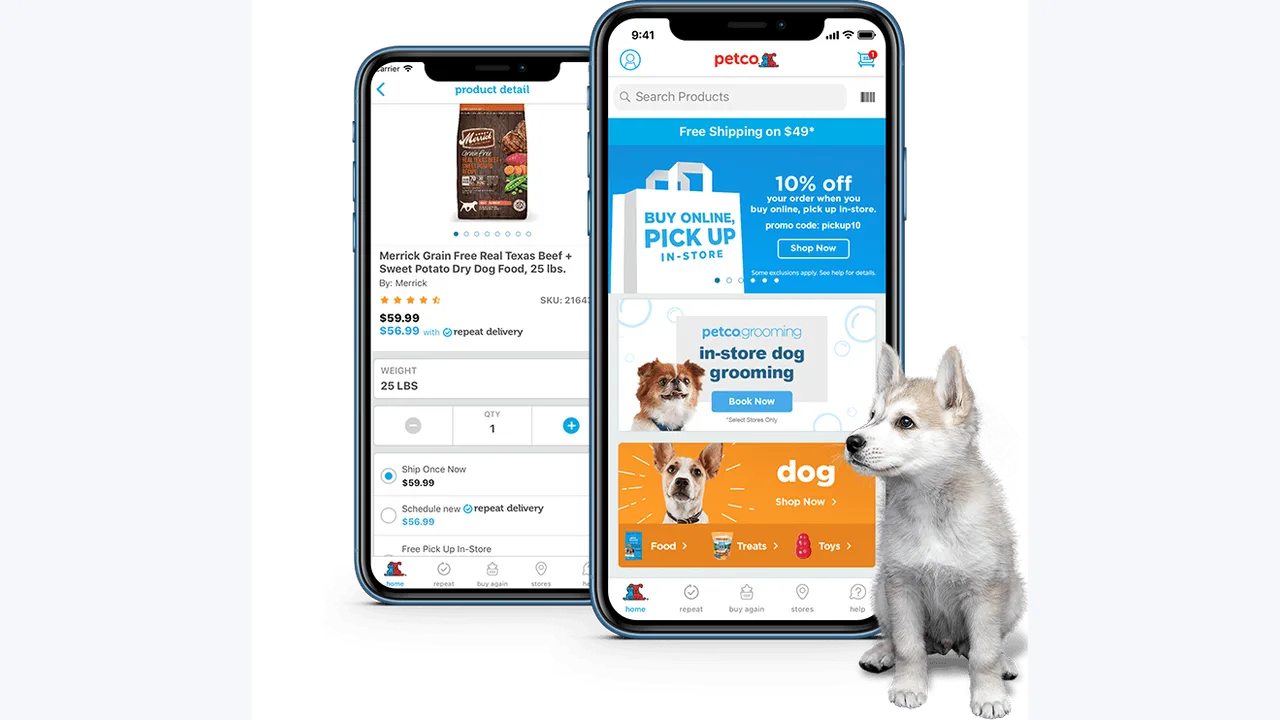
Cross-Platform Mobile Commerce for Petco
Challenge: After a year of development, Petco's mobile app was less than 25% complete.
Result: A team of five replaced a team of 50 and finished the app in four months on AWS serverless, cutting the timeline by 75%.
Read the Petco case study56 sec
Java builds, down from about 46 minutes

Education
Finishing a Data Warehouse for a Global Testing Organization
Challenge: Data reached the AWS data lake, but only skilled developers writing SQL by hand could get it back out.
Result: A new query API lets non-IT staff serve themselves, and Java build times fell from about 46 minutes to 56 seconds.
Read the testing organization case study"JBS feels more like an extension of our internal team than a traditional vendor relationship."
Senior IT Leader, AmeriVet Partners
AI-ASSISTED AUDITS
How AI Speeds Up a Code Audit
AI tools read a large codebase faster than people can. They trace business rules, draft documentation, and generate tests for code nobody wrote down. For a national luxury florist, AI-assisted documentation and test generation covered a codebase of hundreds of thousands of lines before any refactoring began.
Senior engineers review what the tools produce and decide what changes.
READ THE CODE
Codebase
AI tools
Business rules and docs
DECIDE
Generated tests
Cover code before it changes
Senior engineers
Review and decide what ships
COST AND TIMELINE
What Drives Project Rescue Cost and Timeline
Rescue cost and timeline depend on how much of the existing work is usable, and the code audit answers that first. Six factors drive most estimates:
- 01Size and condition of the codebase
- 02Access to code, environments, and the previous team
- 03How much of the work can be kept
- 04Data quality and migration needs
- 05Integrations with other systems
- 06Deadlines the business can't move
How the timeline is set
The audit sets it. Some rescues are mostly targeted fixes, such as a sales platform built by another firm that was stable within two weeks. Others need parts rebuilt in stages. Either way, we fix the riskiest problems first, so the system improves before the whole job is done.
How cost is set
We don't quote a rescue before we've read the code. The audit turns the factors above into an estimate for each stage. Before recommending any piece of work, we ask whether it will pay for itself, and if finishing the project doesn't make sense, we'll say so.
ENGAGEMENT MODELS
Ways to Work With Us
Each model stands alone or leads into the next. Compare all the ways to work with us.
Assessment & Strategy
For companies that need clarity before committing to a build.
Start here if you're not sure what to change first. We review the system component by component, weigh difficulty against business impact, and recommend a path for each part, including what to leave alone. You get a roadmap you can act on with us or on your own.
- Technical assessment
- Architecture review
- AI opportunity mapping
- Modernization roadmap
- Prioritized recommendations
Best when: You need to understand the opportunity, risk, architecture, or roadmap before investing in a larger build.
Projects
For companies ready to build or modernize a defined system.
For a defined scope, senior engineers lead delivery from architecture through release. We work in stages, write tests for core components, and ship through CI/CD. You own everything we build, plus knowledge transfer and documentation tailored to your team.
- Modernization projects
- Custom applications
- Cloud platforms
- Data systems
- Integrations
- AI agents
Best when: You have a clear business problem, workflow, or platform that needs to be built, modernized, or connected.
Teaming / Managed Delivery
For companies that need experienced delivery capacity.
When you need more than a single project, services we can provide include architectural guidance for your existing team, hands-on development, QA, and ongoing support. Senior US-based engineers lead our builds, and nearshore support is an option for ongoing work.
- Senior-led teams
- Embedded engineering
- Ongoing development
- Knowledge transfer
- Flexible support
Best when: You need reliable engineering capacity, technical leadership, or ongoing delivery support without adding unnecessary management overhead.
WHY JBS DEV
How to Choose a Project Rescue Partner
The team that rescues a project should be able to explain what went wrong before it quotes the fix. Ask these four questions.
- Will they read the code before they quote?
- They should. We start every rescue with a code audit, because a quote written before anyone reads the code is a guess. The audit ranks what's broken by risk and shows what can be kept.
- Do they lead with a rewrite?
- Be careful if they do. A rewrite resets the clock and throws away what works. We rebuild only what the audit shows can't be fixed, and say so plainly when a rewrite is the right call.
- Who does the work?
- Senior engineers. Senior US-based engineers lead our builds, with nearshore support available for ongoing work. The people who audit the code are the people who fix it, so nothing is lost between the findings and the work.
- What happens after the rescue?
- The system ends up with you, documented and tested. You own everything we build. After stabilization, we can keep delivering features, provide ongoing support, or hand the system to your team with knowledge transfer and documentation.
JBS Dev is a senior-led custom software development company, founded in 1999, that builds, modernizes, and integrates enterprise systems around the technology clients already own.
FAQ
Software Project Rescue FAQs
What do software project rescue services include?
They include a code audit, risk-ranked findings, stabilization of the issues that break the system, and the work to finish, refactor, or rebuild what's left. Ours are led by senior engineers and end with a system your team or ours can run, with documentation and tests in place.
How do you decide whether to fix or rewrite?
The code audit decides. If the design is sound and the problems are specific, targeted fixes are faster and cost less. If little of the code is worth keeping, a rewrite is the honest answer. For a footwear retailer, JBS Dev fixed the existing Angular site page by page instead of rebuilding it in React.
How quickly can a stalled project be stabilized?
It depends on what the audit finds. Projects stabilize in stages, riskiest fixes first, so users see improvement before the whole job is done. When Petco's mobile app was less than 25% complete after a year, a JBS Dev team of five finished it in four months.
Do you offer software audit services without a rescue?
Yes. A code audit can stand alone. It reviews architecture, code quality, the database, security, tests, and delivery practices, and ranks the findings by risk. You can act on them with us, with your own team, or with another vendor.
Can you take over from another vendor mid-project?
Yes. We've taken over projects that stalled or went sideways under another vendor. We need access to the code, environments, and documentation, and we start with an audit of what's there.
What if the project was built with AI coding tools?
We treat it like any other codebase, with extra attention to tests. AI-generated code can work in a demo and fail in production, with no tests and no one who understands it. We document it, add tests before changing anything, and keep what holds up under senior review.
How much does a project rescue cost?
It depends on the size and condition of the codebase, how much work can be kept, data and integration needs, and fixed deadlines. We don't quote before the code audit. The audit produces an estimate for each stage, and if finishing the project won't pay for itself, we'll tell you.
Do you review software before an acquisition?
That's a different job, scoped to the deal. If you're evaluating a company and its software before a deal closes, see technology due diligence. If you already own the company and a project inside it has stalled, a rescue starts with the same kind of code audit.
