
Data Warehouse Consulting
We bring data from your ERP, CRM, operational databases, and spreadsheets into one trusted platform, so leaders get reports they believe and AI gets data it can use.
Data warehouse
Feeds reports and AI
Pipelines
- ERP
- CRM
- Operational systems
SOURCE SYSTEMS
THE BASICS
What Is a Data Warehouse?
A data warehouse is a central database that collects data from many business systems, cleans it, and organizes it for reporting and analysis. It gives a company a single source of truth, so reports stop contradicting each other. Data warehouse consulting helps a business design that foundation, choose a platform, and build the pipelines that keep it current.
Data lake consulting helps decide what belongs in each layer. Many companies start with a warehouse and add lake storage as their AI and analytics needs grow.

Data warehouse vs. data lake vs. lakehouse
A data warehouse stores structured, cleaned data modeled for reporting, and it is the best fit when the main goal is trusted dashboards and financial numbers. A data lake stores raw data of any type, including files, logs, and images, at low cost, which suits data science and machine learning. A lakehouse combines the two, adding warehouse-style structure and governance on top of lake storage.
WHEN TO BUILD
Signs You've Outgrown Your Reporting
Spreadsheets and point-to-point reports work until a business grows past them. These signs usually show up first.
Reports don't match each other
Finance, sales, and operations bring different numbers to the same meeting, and time goes to arguing over figures instead of decisions.
Month-end means manual exports
Someone spends days exporting data from several systems and reconciling it in spreadsheets before anyone can see results.
Data lives in too many systems
Customer, order, and financial data sit in separate ERP, CRM, and operational systems with no clean way to combine them.
Dashboards are slow or stale
Reports take minutes to load or show last week's data, because they query operational systems directly instead of a warehouse.
Nobody trusts the numbers
Duplicate records, missing fields, and inconsistent definitions mean every report comes with caveats, and leaders double-check everything by hand.
AI projects stall on the data
AI pilots look promising, then stall because the data they need is scattered, inconsistent, or locked inside systems without access.
PLATFORMS
Platforms We Work With
We pick platforms based on the task, accuracy needs, privacy, latency, and cost, and we recommend the one that fits your systems and budget.
The same thinking applies to data lake consulting, where we decide what belongs in lake storage and what belongs in the warehouse.
Microsoft Fabric
For companies on the Microsoft stack, Microsoft Fabric consulting brings data engineering, warehousing, and Power BI reporting into one platform. For an industrial distributor, we rebuilt an Access-based inventory system on Fabric and Azure SQL Server, with self-service Power BI reporting.
Snowflake
Snowflake separates storage from compute, so teams can scale queries without slowing each other down. Our Snowflake consulting covers platform setup, data modeling, pipelines from your source systems, and controls that keep compute costs predictable as usage grows.
Amazon Redshift
Amazon Redshift is AWS's data warehouse, built for analytics at scale. As an AWS Advanced Tier Services Partner, we design Redshift warehouses, connect them to AWS services and source systems, tune table design and queries, and run Redshift workshops through our Quick Launch Lab.
SQL Server, PostgreSQL, and Aurora
Not every company needs a dedicated cloud warehouse. For smaller data volumes, a well-modeled warehouse on Microsoft SQL Server, PostgreSQL, or Amazon Aurora can deliver trusted reporting at lower cost, with a path to grow later.
HOW IT WORKS
How a Data Warehouse Project Runs
STEP 1
Assess sources
We inventory your systems, data quality, and reporting needs.
STEP 2
Choose the platform
We recommend the platform that fits your systems, data, and budget.
STEP 3
Model the data
We design a data model built around how your business measures itself.
STEP 4
Build pipelines
We build ETL or ELT pipelines with automated cleansing and validation.
STEP 5
Report and hand off
We connect dashboards, set role-based access, and hand over to your team.
Data sources we connect
We connect the systems your business already runs: ERP and CRM platforms, operational databases such as SQL Server, PostgreSQL, and MySQL, legacy databases like Microsoft Access, and spreadsheets and files. Our data engineering work uses APIs, data connectors, and custom data pipelines, with automated synchronization so the warehouse stays current. For a post-acute care provider, we unified four separate systems with different data structures.
What your team gets at handoff
You own the platform, the data model, and the pipelines. Services we can provide at handoff include knowledge transfer sessions and documentation covering the model, the pipelines, and how to add new sources and reports. Existing BI and data teams can often run the platform without new specialist hires, and ongoing support is also available.
RESULTS
Data Warehouse Results
For a post-acute care provider, JBS Dev unified four separate systems into one data warehouse, rebuilding five legacy reports and adding ten new ones. For a national disaster recovery company, JBS Dev replaced manual daily extracts with an event-driven AWS pipeline that cut reporting latency from hours to minutes.
4
Systems unified into one data warehouse

Healthcare
One Data Warehouse for a Post-Acute Care Provider
Challenge: Four systems ran in isolation, and analysis depended on Excel pivot tables.
Result: A unified data warehouse with Tableau became one source of truth, with five legacy reports rebuilt and ten new ones added.
Read the post-acute care case studyOn demand
Customer reports, no longer emailed
Food Safety
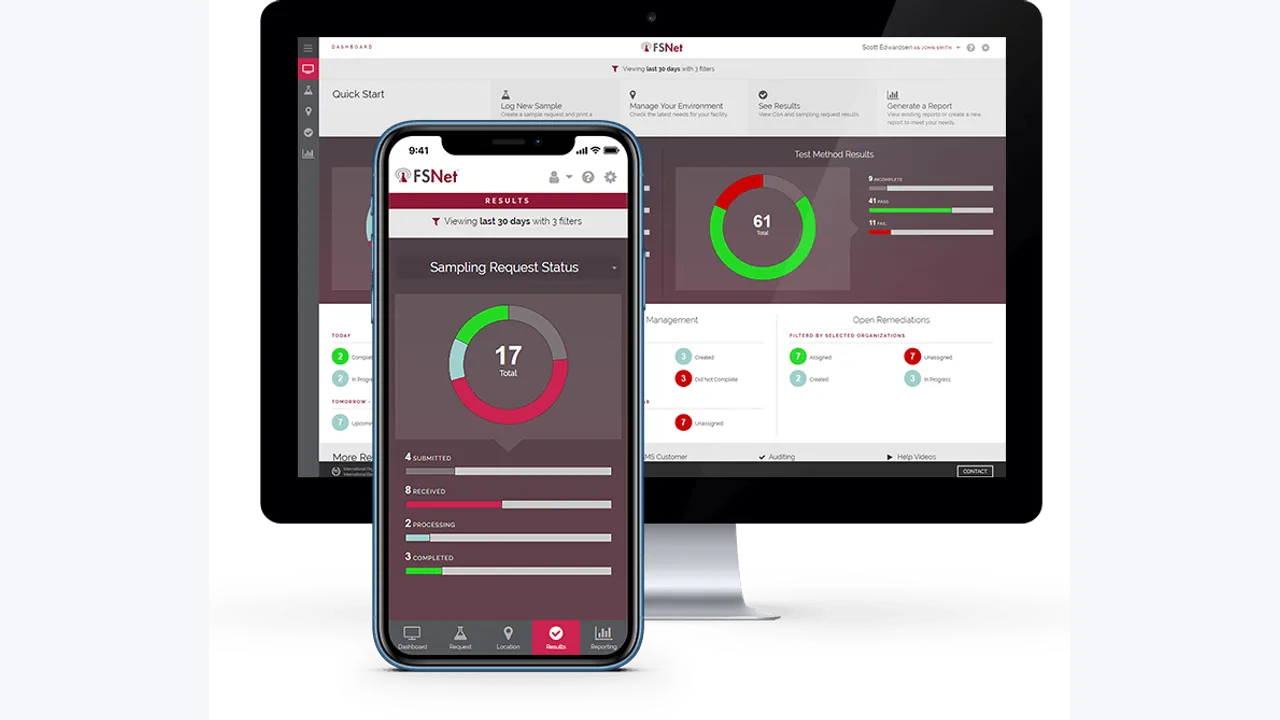
Automated Reporting Warehouse for Food Safety Net Services
Challenge: Reports were emailed to users, and nothing was available on demand.
Result: A Kimball-design data warehouse and customer portal automated reporting and made new client onboarding easier.
Read the FSNS case study56 sec
Java builds, down from about 46 minutes

Education
Finishing a Data Warehouse for a Global Testing Organization
Challenge: Data reached the AWS data lake, but only skilled developers writing SQL by hand could get it back out.
Result: A new query API lets non-IT staff serve themselves, and Java build times fell from about 46 minutes to 56 seconds.
Read the testing organization case studyJBS feels more like an extension of our internal team than a traditional vendor relationship.
Senior IT Leader, AmeriVet Partners
WHAT IT ENABLES
From Data Warehouse to Dashboards and AI
A clean data foundation turns reporting from a monthly project into something leaders check every day. With one trusted source, business intelligence and Power BI dashboards show the same numbers to every team, and AI-powered analytics can forecast demand, flag anomalies, and answer questions about your own data. It is also the first step toward AI: an AI readiness assessment usually starts by checking for AI-ready data. Our clients use their data for dashboards, forecasting, and AI, such as a manufacturer's sales forecasts that reached 85 to 90% accuracy.
ONE TRUSTED SOURCE
Source systems
Data warehouse
Power BI dashboards
WHAT IT ENABLES
Forecasting
Demand and sales
AI-powered analytics
Answers about your own data
What about messy data?
Almost every company's data is messy, and that is a reason to build a data warehouse, not to wait. We profile the data first, then build automated cleansing, validation, and standardization into the pipelines, so quality improves every time data loads. Where older sources such as Access databases hold inconsistent records, reconciliation is part of the work. Data governance, including shared definitions and role-based access, keeps the data clean after launch.
COST AND TIMELINE
What Drives Data Warehouse Cost and Timeline
Data warehouse cost and timeline depend mostly on how many sources you have and how clean they are. Five factors drive most estimates:
- 01Number and type of data sources
- 02Data volume and history
- 03Data quality
- 04Platform licensing and cloud compute
- 05Reporting and access requirements
How the timeline is set
Timelines depend on the number of sources and the state of the data, and the assessment sets them. We deliver in stages, starting with the sources and reports that matter most, so leaders see trusted numbers before every system is connected. More sources and new reports follow on the same foundation.
How cost is set
We don't quote a number before we understand your sources and reporting needs. The assessment turns the factors above into an estimate for the build and for ongoing platform and cloud compute costs. Choosing a platform sized to your data, rather than the largest option, keeps both under control.
ENGAGEMENT MODELS
Ways to Work With Us
Each model stands alone or leads into the next. Compare all the ways to work with us.
Assessment & Strategy
For companies that need clarity before committing to a build.
Start here if you're not sure what to change first. We review the system component by component, weigh difficulty against business impact, and recommend a path for each part, including what to leave alone. You get a roadmap you can act on with us or on your own.
- Technical assessment
- Architecture review
- AI opportunity mapping
- Modernization roadmap
- Prioritized recommendations
Best when: You need to understand the opportunity, risk, architecture, or roadmap before investing in a larger build.
Projects
For companies ready to build or modernize a defined system.
For a defined scope, senior engineers lead delivery from architecture through release. We work in stages, write tests for core components, and ship through CI/CD. You own everything we build, plus knowledge transfer and documentation tailored to your team.
- Modernization projects
- Custom applications
- Cloud platforms
- Data systems
- Integrations
- AI agents
Best when: You have a clear business problem, workflow, or platform that needs to be built, modernized, or connected.
Teaming / Managed Delivery
For companies that need experienced delivery capacity.
When you need more than a single project, services we can provide include architectural guidance for your existing team, hands-on development, QA, and ongoing support. Senior US-based engineers lead our builds, and nearshore support is an option for ongoing work.
- Senior-led teams
- Embedded engineering
- Ongoing development
- Knowledge transfer
- Flexible support
Best when: You need reliable engineering capacity, technical leadership, or ongoing delivery support without adding unnecessary management overhead.
WHY JBS DEV
How to Choose a Data Warehouse Consulting Partner
A data platform outlasts the project that builds it. Ask any data warehouse consulting partner these four questions before you choose, and here is how we answer them.
- Will they recommend the platform that fits, or the one they resell?
- We are provider-aware rather than provider-locked. We pick platforms based on the task, accuracy needs, privacy, latency, and cost, and recommend the one that fits your systems and budget, not a vendor quota.
- Who designs the data model?
- Senior engineers. Engagements are led by senior engineers and technical leaders who can make architecture, integration, and security decisions directly, with fewer handoffs and faster decisions. The people who design your data model are the ones who build it.
- Can our team run it afterward?
- Usually, yes. Existing BI and data teams can often run the platform without new specialist hires. Services we can provide include knowledge transfer and documentation for your team, and ongoing support if you want it.
- Where is the team?
- Senior US-based engineers lead our builds, with nearshore support available for ongoing work. From the first call, you will know exactly who is designing, building, and supporting your data platform.
JBS Dev is a senior-led custom software development company, founded in 1999, that builds, modernizes, and integrates enterprise systems around the technology clients already own.
FAQ
Data Warehouse Consulting FAQs
What does data warehouse consulting include?
Data warehouse consulting covers assessing your data sources, choosing a platform, designing the data model, building ETL or ELT pipelines with data quality checks, and connecting dashboards with role-based access. Ours ends with a platform your team owns, plus knowledge transfer and documentation so they can run and extend it.
What's the difference between a data warehouse and a data lake?
A data warehouse stores cleaned, structured data modeled for reporting, while a data lake stores raw data of any type at low cost. Warehouses suit trusted dashboards and financial reporting. Lakes suit data science and machine learning. A lakehouse combines both, and many companies start with a warehouse and add a lake later.
Which data warehouse platform should we use?
The one that fits your systems, data volume, and budget. Microsoft-heavy companies often fit Microsoft Fabric, AWS-based companies often fit Amazon Redshift, and smaller data volumes may need only a well-modeled SQL database. We pick platforms based on the task, accuracy needs, privacy, latency, and cost.
Our data is messy. Can we still build a data warehouse?
Yes. Almost every company's data is messy, and a data warehouse is where it gets fixed. We profile the data first, then build automated cleansing, validation, and standardization into the pipelines. For a post-acute care provider, an automated data quality suite was part of unifying four separate systems.
How long does a data warehouse project take?
It depends on the number of sources and the state of the data, and the assessment sets the timeline. We deliver in stages, starting with the sources and reports that matter most, so leaders see trusted numbers early. More sources and reports follow on the same foundation.
How much does a data warehouse cost?
It depends on the number and type of sources, data volume and history, data quality, platform licensing and cloud compute, and reporting and access requirements. The assessment turns those factors into an estimate for the build and for ongoing platform costs, so there are no surprises after launch.
Can our own team maintain the data warehouse after handoff?
Yes, in most cases. Existing BI and data teams can often run the platform without new specialist hires. Services we can provide at handoff include knowledge transfer sessions and documentation covering the data model, pipelines, and how to add new sources. Ongoing support is also available.
